Offshore inspection robots face salt water, poor visibility, currents, and structures that are hard to reach safely. Their future depends less on dramatic demos than on repeatable inspection results that engineers can use to plan repairs.
Quick read
- Underwater robots can inspect hulls, pipelines, cables, and support structures without sending a person into the same space.
- Cameras find visible damage; non-destructive testing can check for flaws below the surface.
- The open question is whether operators can trust the data across long missions and changing sea conditions.
Where robots help first
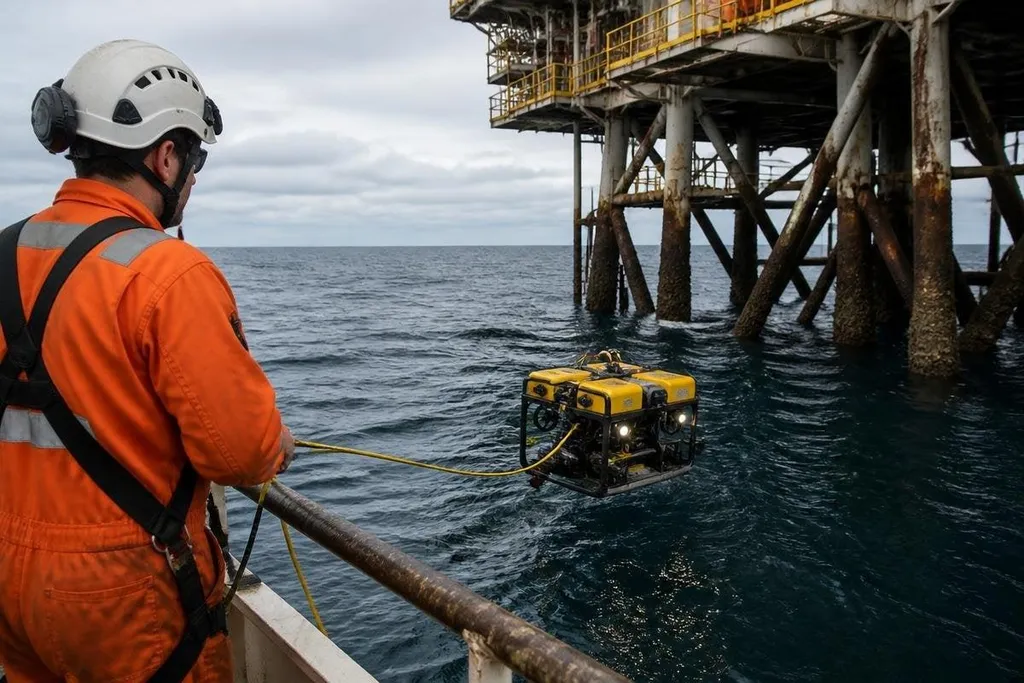
The work starts with access. A robot can travel along a submerged structure while an operator watches video, or it can follow a planned route with limited control from the surface. The machine may carry lights, cameras, sonar, or tools that check material condition.
That matters on offshore platforms, wind turbines, ships, and underwater pipelines. A person may need a work boat, diving equipment, or a shutdown before they can reach the same area. A robot can reduce the time spent putting people near moving water, suspended equipment, and confined spaces, though it doesn't remove the need for trained crews.
The useful output is a record tied to a place. Operators need to know where an image came from, what part of the structure it shows, and whether a later inspection finds a change. A video with no reliable position data has limited value once the robot leaves the site.
Seeing damage is only the first step
Cameras can show corrosion, cracks, missing coating, loose cables, and marine growth when visibility allows. Sonar can help when water blocks the camera, but it gives a different type of record and may need careful review by a person who understands the structure.
Non-destructive testing means checking a part without cutting it apart. Depending on the job, a robot may carry equipment for ultrasonic testing, magnetic testing, or thickness measurement. Each method has limits. A sensor must stay at the right distance, keep contact with the surface, or move at a controlled speed for the reading to mean much.
The machine also needs to hold its position. Currents can push it away from a surface, while propellers can stir sediment into the camera view. A small position error can turn a close inspection into a wide shot of the wrong section.
This is where software matters. Mapping can connect images and sensor readings to a three-dimensional model, but the model still needs checks against known points on the structure. I’d trust a robot report only when its location data, sensor readings, and review process are clear enough for another engineer to repeat the finding.
The hard parts are outside the demo tank
A controlled test can show that a robot moves, turns, and sends video. Offshore work adds wave motion, changing light, fouling, rust, cable drag, and equipment recovery. A tethered robot may send steady power and data, but the cable can catch on a structure.
A free-swimming robot avoids that cable, yet it has to manage battery life, communication, and recovery. Weather can also decide whether the inspection starts. If a vessel cannot hold position, the robot may not reach the planned area. If the vehicle loses contact with the surface team, a safe return plan matters more than another sensor on the payload.
The business case needs the full job cost. That includes the vessel, crew, launch equipment, data review, maintenance, and any repair work that follows. A robot may cut exposure to hazards while adding time for planning and data checks. Without a source-backed trial or contract figure, it would be wrong to claim a fixed saving.
A useful offshore inspection report names the robot, vessel, task, test date, and human checks. Offshore inspection robotics reporting can place those facts beside claims about lower risk or shorter vessel time. That gives you a clear record before the next section asks what still needs proof.
What still needs proof
Robot makers need to show more than a clean inspection clip. Useful proof would cover repeat runs, bad visibility, loss of position, sensor errors, and the handoff from robot data to a repair decision.
A future inspection system also needs clear responsibility. The operator should know when the robot is driving itself, when a person has control, and what happens after a fault. The maintenance team needs access to logs, sensor settings, software versions, and the original files rather than a compressed highlight video.
No evidence pack supports a claim about one model, one supplier, or one price here. That limit matters. Offshore inspection is too costly for a general promise to replace divers or inspection crews.
A buying checklist for inspection teams
Before a pilot, check these points:
- Define the surface: name the structure, material, depth, access route, and inspection method.
- Set the evidence standard: decide which images, measurements, position records, and logs an engineer must receive.
- Test recovery: confirm how the crew retrieves the robot after a power loss, tether problem, or lost signal.
- Plan the review: assign people to check sensor data and mark findings against the structure model.
- Price the whole job: include the vessel, crew, launch system, data work, maintenance, and follow-up inspection.
The next useful offshore robot will be the one that leaves a traceable inspection record after a difficult mission. Until operators publish repeatable results from real structures, the safe choice is to buy a verified inspection process, not a promise about autonomy.